
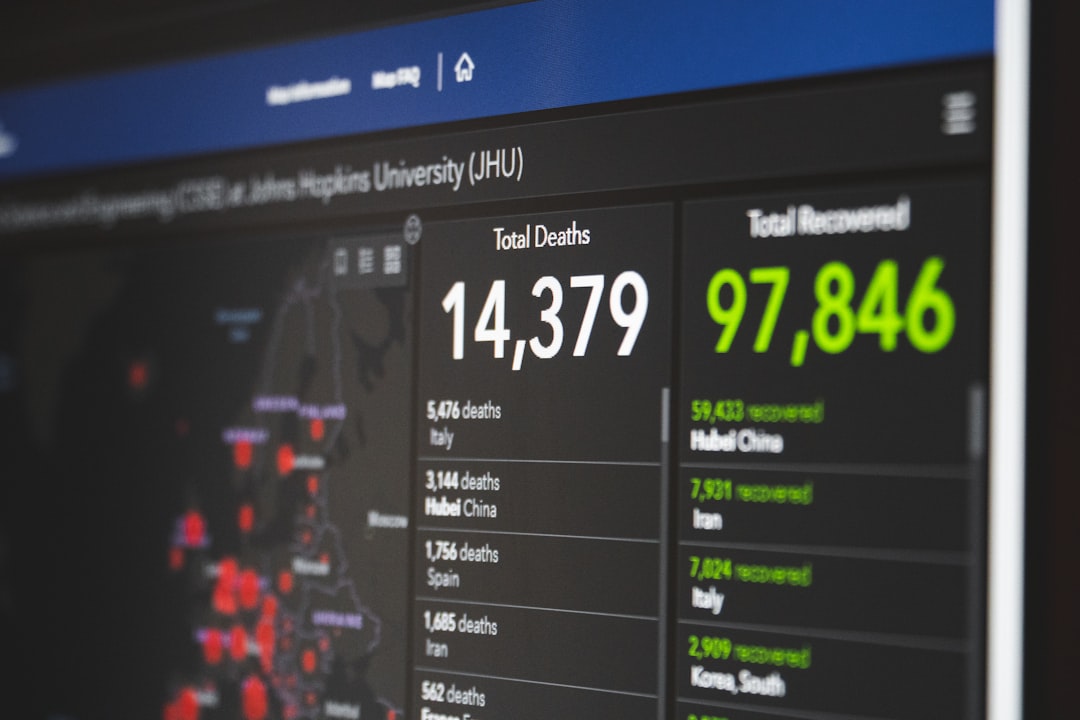
As the web continues to grow in size and complexity, the methods we use to extract data from it are evolving rapidly. What once relied on simple scripts that fetched static HTML pages has transformed into sophisticated systems powered by machine learning and automation. Today, businesses, researchers, and developers face a crucial decision: should they rely on traditional web scrapers, or embrace the new generation of AI-driven crawlers?
TLDR: Traditional scrapers follow predefined rules to extract structured data from websites, making them predictable and efficient for stable targets. AI crawlers use machine learning and adaptive logic to understand content context, handle dynamic websites, and adjust to changes automatically. While scrapers are typically faster and cheaper to deploy, AI crawlers are more resilient and scalable in complex environments. Choosing between them depends on the project’s scope, budget, and long-term goals.
Understanding the difference between these two approaches can significantly impact project success, maintenance costs, and data quality. Let’s break down what separates AI crawlers from traditional scrapers and where each excels.
What Are Traditional Scrapers?
Traditional web scrapers are programs built with predefined rules that extract specific pieces of information from web pages. They rely heavily on:
- Static HTML structures
- CSS selectors or XPath queries
- Rule-based logic
- Manual configuration
For example, a scraper built to extract product prices may be programmed to retrieve data from a specific HTML element such as a div with a designated class. If the website changes its layout or renames that class, the scraper often breaks.
This approach has worked effectively for years, particularly for:
- Price monitoring
- SEO data collection
- Competitive analysis
- Academic research
Traditional scraping tools include frameworks like Scrapy, Beautiful Soup, and Selenium-based automation scripts. They offer high performance and customization but require ongoing technical management.
What Are AI Crawlers?
AI crawlers represent the next evolution in data extraction. Instead of relying solely on fixed instructions, they leverage:
- Machine learning models
- Natural language processing (NLP)
- Pattern recognition
- Adaptive decision-making
An AI crawler doesn’t just look for a specific HTML tag—it attempts to understand the content. For instance, it can identify product descriptions, prices, author names, or reviews based on context, even if the layout changes.
This makes AI crawlers particularly powerful when dealing with:
- Dynamic or JavaScript-heavy sites
- Unstructured content
- Frequently updated layouts
- Large-scale, cross-domain crawling
Rather than breaking when encountering change, AI crawlers can adapt—or at least require significantly fewer manual updates.
Key Differences Between AI Crawlers and Traditional Scrapers
1. Rule-Based vs Intelligent Behavior
Traditional scrapers are explicitly programmed. Every action, from clicking a pagination button to extracting a field, is predefined.
AI crawlers, on the other hand, are model-driven. They use training data and algorithms to interpret patterns and make contextual decisions. This means they can identify target data even when the website’s structure evolves.
2. Handling Dynamic Content
Modern websites often use:
- JavaScript frameworks
- Infinite scroll
- Interactive elements
- API-driven content
Traditional scrapers often struggle here unless paired with headless browsers or heavy automation workflows.
AI crawlers tend to integrate rendering engines and behavioral analysis tools that better simulate human interaction—navigating complex paths automatically.
3. Maintenance and Scalability
One of the most expensive aspects of traditional scraping is maintenance. When a website changes structure:
- Selectors must be rewritten
- Rules must be updated
- Testing must be repeated
AI crawlers reduce maintenance by adapting to moderate layout changes through contextual recognition. Though not immune to breaking, they typically require fewer manual interventions over time.
4. Accuracy and Data Interpretation
Traditional scrapers excel at extracting clearly defined, structured fields. However, they lack semantic understanding. If a label changes from “Price” to “Current Offer,” a rule-based scraper might fail.
AI crawlers can detect that “Current Offer” likely represents a price due to contextual clues in surrounding content. This gives them an advantage in extracting semi-structured or ambiguous data.
5. Speed and Resource Consumption
Traditional scrapers are generally:
- Faster to execute
- Lighter on resources
- Cheaper to operate
AI crawlers require:
- Model processing power
- Greater memory usage
- More complex system architecture
This typically means higher computational costs, especially at scale.
6. Initial Setup Complexity
Setting up a traditional scraper can be straightforward if the target website is stable. However, building a reliable AI-powered crawling system often involves:
- Training or integrating ML models
- Configuring NLP pipelines
- Designing feedback loops
- Testing adaptive heuristics
The upfront investment is typically higher for AI crawlers.
Comparison Chart
| Feature | Traditional Scrapers | AI Crawlers |
|---|---|---|
| Logic Type | Rule-based | Machine learning-driven |
| Adaptability | Low – breaks with layout changes | High – adapts to structural shifts |
| Speed | High | Moderate to High |
| Resource Usage | Low to Moderate | Moderate to High |
| Maintenance | Frequent updates required | Reduced manual intervention |
| Best For | Stable, structured data extraction | Complex, evolving web environments |
Security and Detection Differences
Websites increasingly deploy anti-bot measures such as:
- CAPTCHAs
- IP rate limiting
- Behavioral fingerprinting
- Device identification
Traditional scrapers often rely on proxy rotation and request throttling to avoid detection.
AI crawlers can incorporate behavior simulation, mimicking real user actions such as scrolling, mouse movements, and engagement timing. This makes them potentially more resistant to detection—although ethical and legal considerations remain crucial.

Cost Considerations
When comparing costs, decision-makers should consider:
- Development time
- Maintenance burden
- Infrastructure requirements
- Data accuracy impact
Traditional scrapers are generally cheaper to build and deploy initially. However, frequent website updates can result in hidden long-term maintenance costs.
AI crawlers demand higher upfront investment but may offer better long-term ROI for large-scale or mission-critical projects.
Use Case Examples
When Traditional Scrapers Shine
- Monitoring specific competitor pricing pages
- Extracting tabular financial data
- Collecting structured datasets from government portals
- Short-term research projects
When AI Crawlers Excel
- Aggregating news content across thousands of domains
- Extracting insights from user-generated content
- Tracking brand sentiment across dynamic platforms
- Enterprise-level data intelligence systems
The Future: Hybrid Approaches
The most effective systems today often blend both approaches. Hybrid crawlers use rule-based extraction for predictable elements while leveraging AI models to:
- Classify pages
- Detect anomalies
- Identify new data patterns
- Adapt to structural shifts
This layered method balances speed, efficiency, and adaptability.
Final Thoughts
The debate between AI crawlers and traditional scrapers isn’t about which is universally better—it’s about fit. Traditional scrapers remain highly effective for stable, structured environments where precision and speed matter most. AI crawlers excel in complex, evolving ecosystems that demand adaptability and intelligence.
As the web becomes more dynamic and user-driven, AI-powered crawling will likely become the dominant approach. However, rule-based scraping will continue to serve as a reliable, efficient backbone for many industries.
Ultimately, the smartest strategy may not be choosing one over the other—but understanding how each works and applying them strategically to match your data goals.